A warm-white, shielded outdoor LED is a suitable choice for lighting an outdoor dog kennel’s gate and feeding area. Choose a wired light with a manual switch for regular evening care when a suitable electrical supply is available. A solar LED can serve a kennel without a nearby supply if its charging and runtime meet your needs. Use motion control for the approach path, with a manual override for longer visits. Keep the sleeping area out of the beam.
Which Lighting Setup Fits Your Kennel?
Solar describes the power source; a motion sensor describes the control. A light can have both. Match the setup to the job rather than choosing by the product label alone.
| Your situation | Suitable setup | What to check |
|---|---|---|
| Feeding and cleaning | A wired outdoor LED with manual control. | The beam must reach the bowls and work area while you stand at the kennel. |
| A kennel away from an electrical supply | A solar LED with sufficient usable runtime. | The panel needs a suitable charging position, which may be separate from the lamp. |
| Walking to the gate | An outdoor LED with motion control. | The sensor should cover the approach rather than the occupied run. |
What Color and Brightness Should You Choose?
Consider 2,700–3,000 K warm white. DarkSky’s luminaire guidelines identify this range as warm white; it is an outdoor-lighting choice, not a proven optimum for canine health. Darksky approved luminaires guidelines
For brightness, check whether you can see your dog’s posture, the water level, debris, puddles and the closed latch after dark. The sources cited here do not establish a universal kennel lumen or lux target. Beam spread, mounting position and shadows affect the result. For commercial premises, have a lighting designer identify the applicable illumination requirements and measurement method.
Check the light while standing where you open the latch and refill the bowls. If your body blocks the beam, change the lamp’s position before buying a brighter one. Then check for glare from the dog’s resting position, including reflections from wet floors and metal bowls. These are practical placement checks, not a substitute for required commercial lighting measurements.
A shielded, carefully aimed light should stay within your boundary and away from the bed and neighboring windows. This follows the DarkSky and Illuminating Engineering Society principles of directing light only where needed and using no more than necessary. Lighting principles Avoid flashing modes, and check fixture and dimmer compatibility if you notice flicker.
What Weather Protection Does It Need?
Choose a fitting rated for the water that can actually reach it. Rain can blow beneath an open-sided canopy, and cleaning may expose a light to spray. Check permitted exposure, mounting position and operating temperatures for the fixture, driver, switch and connections. A rating on the lamp alone does not establish the protection of a separate plug or connector.
If you wash the kennel with chemicals or pressurized water, give the supplier your cleaner, dilution, spray method and pressure. Confirm compatibility with the housing, lens, seals and fasteners rather than treating an outdoor label as washdown approval.
Are Solar Lights Suitable for a Dog Kennel?
Before choosing solar, ask for runtime at the brightness you’ll use, charging requirements and battery temperature limits. Check panel shading during charging hours and operation after cloudy days; a full-charge runtime claim alone doesn’t show how the light will perform at your site.
For example, four 5-minute visits need 20 minutes of light, before cleaning time or extra sensor triggers. That’s a lighting calculation, not a dog-care schedule or a promise of battery performance. Keep a backup light for a depleted battery or equipment failure.
Should the Light Stay On All Night?
Don’t leave the kennel’s task light on all night simply because it is outdoors. Switch it off after care tasks. Any necessary overnight path lighting should have a separate control and stay away from the sleeping shelter. Timers and motion sensors help limit light to when it is needed. Lighting principles
Test the sensor from the path and watch whether your dog triggers it inside the run. Adjust detection if the bed keeps lighting up. Choose an override that lets you hold the light on during cleaning, and check how that mode ends in the manufacturer’s instructions.
For licensed kennel boarding in England, guidance specifies 10–12 hours daily where artificial lighting is used and lights off for a period of darkness overnight. This does not prescribe extra electric-light hours on top of daylight for household dogs. Dog kennel boarding licensing statutory guidance for local authorities#part a general conditions schedule 2 of the regulations
Can the Light Be Installed Safely on Your Kennel?
A suitable light also needs a safe cable route and support. Keep lamps, cables, drivers and batteries beyond chewing, jumping and climbing reach, including through the mesh. Use the specified driver and compatible controls. Have a qualified electrician handle permanent wiring, weatherproof connections and required grounding or bonding; don’t use the kennel frame as an improvised electrical ground.
For a U.S. outdoor outlet, confirm GFCI protection. Test GFCIs after installation, at least monthly, after a power failure and as the manufacturer directs. 099_0.pdf
A suitable wall or separately designed post can keep the extra load off the kennel. For frame mounting, first ask whether the manufacturer approves a fixing point and accessory load. Supply the light and bracket weights, bracket projection, any solar panel’s size and tilt, and base/anchor details for assessment against local wind exposure. Get drilling approval and coating-repair instructions; don’t treat mesh or canopy fabric as an assumed support.
During use, inspect brackets, lenses and cables, especially after storms. Keep the dog away from damaged equipment or fittings with water inside, and have an electrician assess electrical faults.
Lighting Layout Example: Haisen’s Welded Kennel
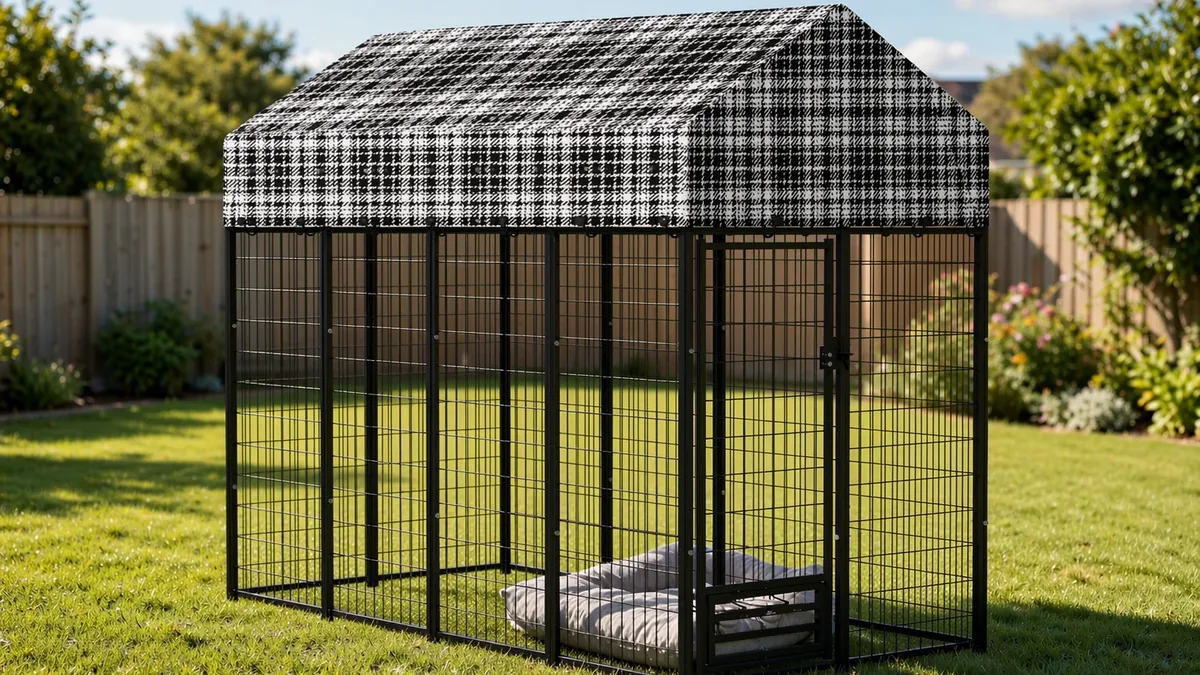
Haisen’s published specifications for the 8 × 4 × 6 ft welded kennel list a rotating, lockable feeding door and a canopy above open wire sides. Those features give two useful planning cues: feeding access needs its own visibility check, and the overhead cover does not enclose the light against weather.
For this layout, check the feeding access separately from the main gate. A lamp aimed only at the entry may leave the bowl area in shadow. Mark both work positions and the proposed cable route on a custom kennel layout, keeping wiring and brackets clear of moving doors and sharp fixings out of the enclosure. This example applies the published layout to lighting placement; it does not establish tested illumination or an approved mounting load.
Planning light positions on a Haisen kennel?
Send your kennel model, layout and proposed fixing points. Ask Haisen to confirm whether the kennel configuration can accommodate them before installation.
References
- DarkSky International. Darksky Approved Luminaires Guidelines.
- DarkSky International. Lighting Principles.
- GOV.UK. Dog Kennel Boarding Licensing Statutory Guidance for Local Authorities.
- US Consumer Product Safety Commission. S3fs Public.