
Project procurement / Temporary perimeter control
Temporary Fence Panels
for Construction Sites
Plan a removable construction boundary with Canadian-style welded-wire panels, matched feet and connectors. Haisen supplies panel configurations for project orders; send the fence-line plan, site conditions and destination for a specification-based quotation.

01 / Panel selection
Choose the panel.
Specify the complete line.
Compare nominal sizes for the layout, then confirm the actual panel dimensions, connections, feet and required support. The selected panel does not establish the performance of the installed fence.
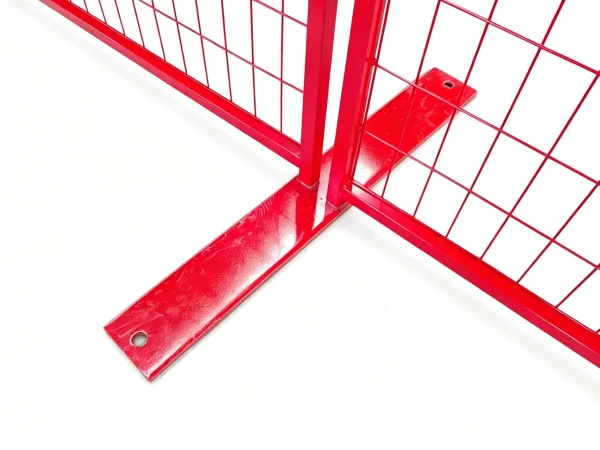
| Listed item | Available configuration |
|---|---|
| Nominal panel size | 6 × 8 ft, 6 × 9.5 ft or 6 × 10 ft; height × length. |
| Wire diameter | 3.0, 3.5 or 3.8 mm. |
| Outer frame | 25 × 25 or 30 × 30 mm square tube. Confirm wall thickness separately. |
| Horizontal member | 20 × 20 or 25 × 25 mm square tube. |
| Finish | Hot-dip galvanized or powder coated; confirm coating specification and requested RAL color. |
Choose the mesh opening and component combination from the full temporary fence specification. Confirm availability for the selected order; listed options are not a declaration that every combination has the same strength.
02 / Fence-line planning
Draw the gates first.
Then count the panels.
Mark vehicle access, pedestrian routes, corners, changes in level and project phases before turning the perimeter length into a purchase quantity.
Map access and the public interface
Show delivery vehicles, pedestrian entrances, emergency routes and gate clear openings. Keep feet and supports out of the agreed walking route. Review sight lines, excavation offsets and boundary restrictions with the responsible site team.
Count each straight section separately
As a preliminary example, a 100 ft straight section divided by 10 ft nominal panels gives 10 panels. This excludes connector allowance, gates, corners, overlap and field adjustment. Prepare the final component count from actual assembled dimensions.
Allow for changes during construction
Identify panels that will move as works progress and how the boundary will remain closed during relocation. Count separate gate hardware, spare connectors and replacement panels rather than assuming they are included.
For longer or irregular boundaries, use the panel size and coverage guide alongside the project drawing.
Discuss your fence line03 / Installation conditions
Match the support
to the site conditions.
Provide ground conditions, exposure, fence height, run lengths and any screening or signage before the support arrangement is reviewed.
Ground, feet and connections
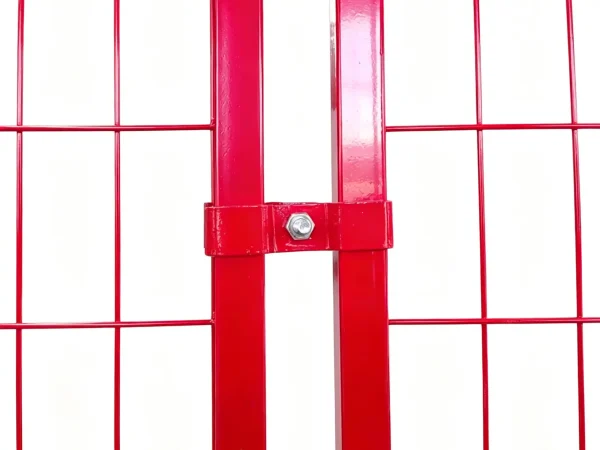
Check slope, surface condition and bearing support. Specify the feet, connectors, anchoring or ballast and bracing required by the reviewed arrangement. A loose panel on a detached foot is not a complete installation.
Screening changes the wind load
Privacy fabric and large signs add wind-exposed area. ASTM F3342-19 flags the need to evaluate screened temporary fencing for wind loading. Request a site-specific review before adding fabric; this page provides no universal ballast quantity or wind rating.[1]
Use the right protection for the hazard
Perimeter panels are not automatically fall-protection guardrails or vehicle-impact barriers. Where workers are exposed to a fall hazard, OSHA § 1926.501 specifies protection for the relevant work condition; a site boundary alone does not satisfy those duties.[2]
04 / Finish & specification
Compare the finish
against the exposure.
Ask for the coating specification and maintenance method, not only the words “galvanized” or “powder coated.”
| Selection | What to establish before approval |
|---|---|
| Hot-dip galvanized | State the required coating specification, inspection evidence and treatment of cut or damaged areas. Corrosion performance depends on the actual coating and exposure. |
| Powder coated | Confirm substrate treatment, coating requirements, RAL color and acceptable appearance. Include a repair method for handling damage and contact points. |
| Repeated relocation | Review frame corners, welds, mesh connections and coating condition between uses. Keep bent panels and damaged fittings out of the usable stock. |
| Replacement compatibility | Match actual frame section, connection position, foot interface and height. Do not mix components based on nominal panel length alone. |
The galvanizing and powder-coating comparison explains the purchase and inspection questions in more detail.
05 / Acceptance & reuse
Check the batch.
Keep the next project in mind.
Agree the delivery condition, inspection points and packing list before dispatch. A useful quotation separates panels from feet, connectors, gates, support equipment and freight.
Product checks
Compare panel dimensions, wire and tube measurements, mesh opening, weld appearance, sharp projections and finish with the approved specification. Check fitting compatibility on the selected sample assembly.
Packing and counts
Request packed dimensions, gross weight and a component list by package. Provide lifting and unloading constraints. Ask whether racks are supplied and whether any proposed rack is suitable for loaded transport.
Storage and repairs
Separate damaged stock, remove debris and let panels dry before storage. Support frames rather than mesh and protect coated contact points. Follow the storage and transport checklist for dispatch and arrival records.
Supplier evidence
See the factory.
Verify the order.
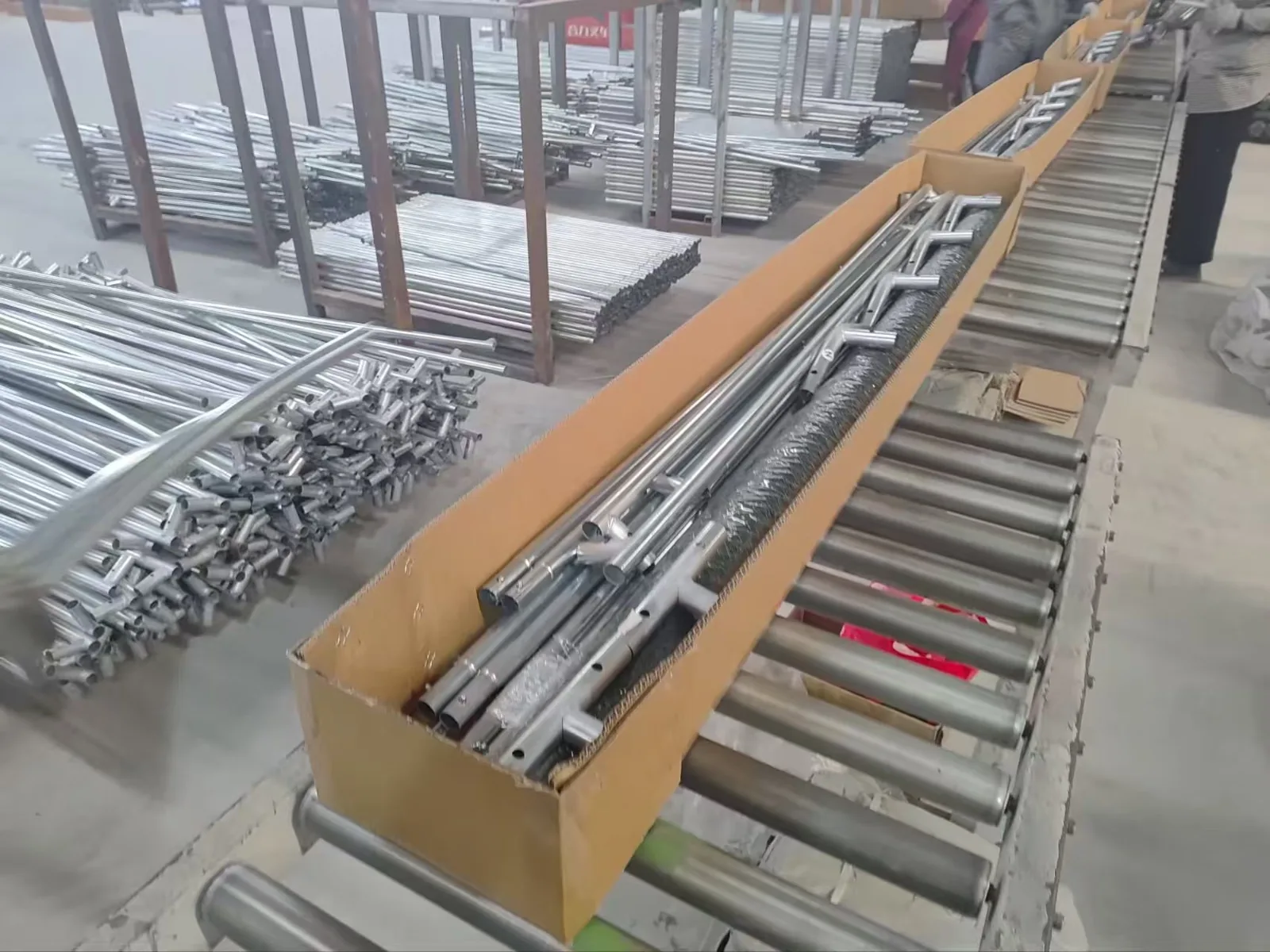
Hebei Haisen Fence Products Co., Ltd. was established in 2017. The company registration, workshop photographs and processing videos are available on our company page.
Use the approved drawing, sample and inspection criteria to evaluate your purchase. Workshop photographs show facilities and activities; they do not establish a product load rating or certify a finished installation.
06 / Questions before ordering
Construction project questions.
Are 6 ft-high temporary panels suitable for every construction site?
No. The listed range has a nominal 6 ft height, but contract documents, local requirements, site hazards and access conditions determine the required boundary. Supply those requirements before selecting the system.
Can privacy screening or printed branding be fitted?
Include the material, coverage and attachment method in the site review. Screening and signs change wind loading and can change the required support. Do not assume an unscreened arrangement remains suitable after screening is added.
Are feet, connectors, gates and braces included?
The quotation must identify the supplied items and quantities. Ask for a complete bill of materials and mark equipment to be sourced locally. Gate designs and support equipment need confirmation for the project.
Are the panels OSHA approved or ASTM certified?
No blanket OSHA approval or ASTM certification is claimed here. OSHA duties depend on the work and hazard; the ASTM reference supplies planning context. Ask for the specific evidence required by your contract and review the finished installation separately.
How many panels should I order?
Divide each straight fence section by the actual installed panel coverage, then account for gate openings, corners, connectors, changes in level and spare stock. Nominal panel length gives a preliminary count, not a final installation schedule.
Can Haisen arrange delivery to the United States?
Provide the destination port or ZIP code, unloading conditions, quantity and required date for a quotation. Confirm which ocean freight, import and inland-delivery services are included; do not treat the target arrival date as the production lead time.
What changes the project price?
Panel size, wire and tube specification, finish, component quantities, packing, order quantity and freight affect the quotation. Compare offers against the same bill of materials and delivery scope.
Start with your project
Send your site plan.
Build a comparable quote.
A marked-up sketch and destination are enough to start the specification discussion.
- Total fence line, straight-section lengths, corners and gate openings.
- Panel size, wire diameter, mesh opening, tube section and finish.
- Ground conditions, wind exposure, screening and project requirements.
- Quantity, component list, U.S. port or ZIP code and delivery target.
For drawings or photographs, email [email protected]. Include the same project name in your message.
Request a project quotation
Use the message field for your configuration, quantity and delivery requirements.
MOQ, pricing, production timing and delivery terms are confirmed for the actual specification and quantity.
Technical context: [1] ASTM F3342-19: temporary construction fence applications · [2] OSHA § 1926.501: fall-protection duties. References do not establish product certification or replace the project’s installation review.