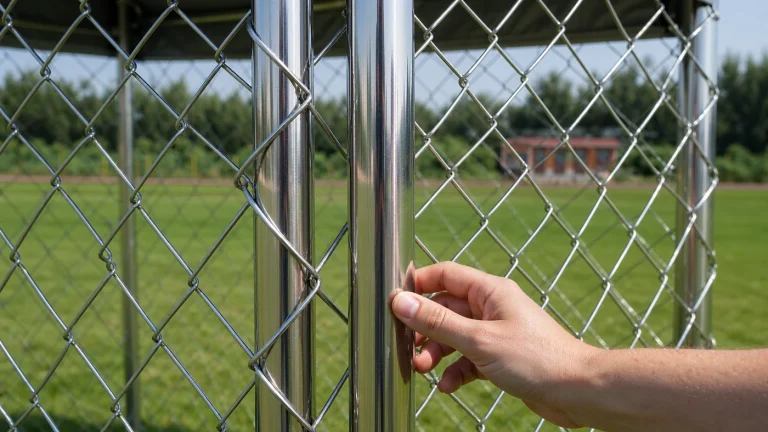
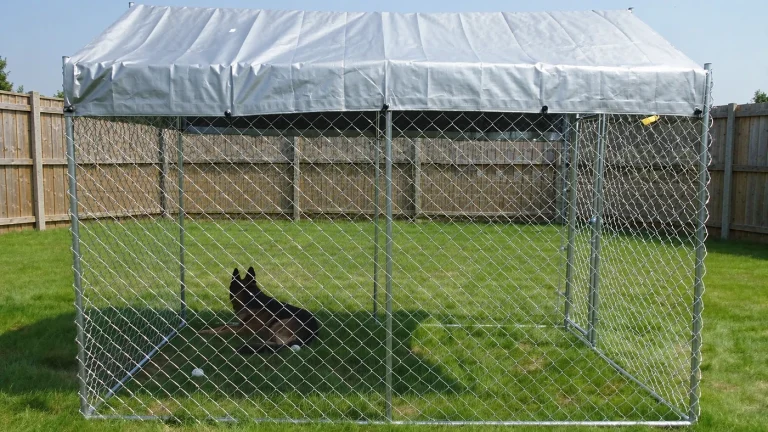
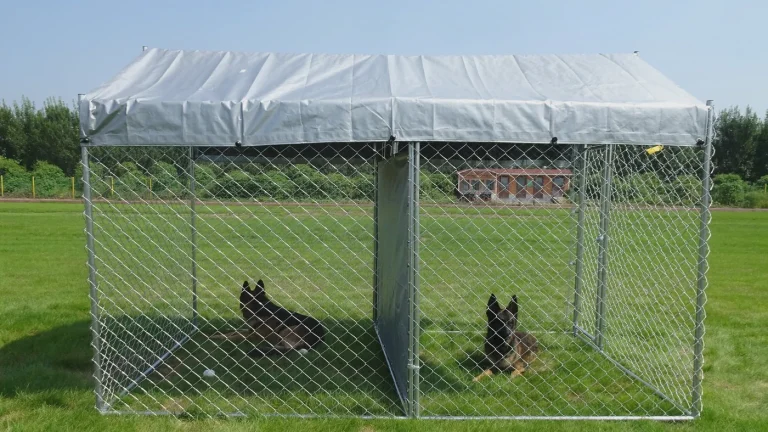
Prevent pooling by setting the cover so it follows the frame’s slope all the way to a clear runoff edge, with the fabric supported across the full span and pulled tight. A cover that sags between supports, or holds a fold at the edge, can catch water even when the roof looks steep. Once a pocket forms, its weight can pull the fabric lower, so correct the shape before the next rain. A 10 mm average depth of water over 1 m² weighs about 10 kg at 1 kg per litre. Water density Empty any existing pool safely before adjusting the cover.
Support the Cover Along the Whole Span
The frame gives the cover its shape. If a roof bar or brace is missing, the gap between the remaining bars is wider, so the fabric sags into it. Check the parts list and assembly drawing for the supports specified for your model, and fit them before tensioning the fabric.
Look for bent rails, loose joints and torn fittings at the same time. Ask the supplier or a qualified installer to assess damaged parts before refitting. A moved support or a connector that is not fully seated can leave a dip that returns after rain.
Tension the Fabric Evenly
Work in calm weather. Centre the cover and line up the fastening points before pulling anything tight. If the manual specifies staged tightening, take up slack a little at a time on opposite sides; pulling one corner fully tight first can drag the cover off centre.
Use every attachment point shown. A skipped fastener can put more strain on the rest and let the fabric shift in wind. Stop if a seam opens, an eyelet stretches or tears, a rail bends or the gate starts catching.
- Use the fasteners specified for the cover.
- Don’t swap elastic fittings for rigid straps unless the supplier approves.
- Keep hooks and loose ends out of your dog’s reach.
Don’t tilt the kennel or prop up the fabric with an unsecured pole. Check the model’s roof slope, ridge height and support spacing before changing the frame.
Keep the Low Edge Clear
Water leaves at the lowest edge, so keep that edge clear. Remove leaves and twigs using the cleaning method in the instructions. Free trapped fabric and folded hems that can dam the flow.
Don’t cut drain holes. They let rain through and give tears a place to start. A second tarp can make things worse: the new layer can sag into the same low spot and form another pocket.
Keep runoff away from bedding, bowls and the gate, and watch for soil washing away around anchors. If you run a licensed boarding kennel in England, the statutory guidance also requires unblocked drainage and clean, dry bedding. That rule applies to the licensed setting, not every home kennel. Dog kennel boarding licensing statutory guidance for local authorities
Check the Cover in Use
A cover can look tight in dry weather and still hold a shallow saucer of water after steady rain. Look along the roof from ground level after a shower, and from both ends; a shallow dip can hide from one angle. A low point shows as a break in the line, and water can leave a faint tide mark at its edge. The fabric may look smoother there. Check the matching fasteners on opposite sides; one that feels looser is a clue that the cover has shifted.
Repeat the check before wet weather and after heavy rain, strong wind or frame movement.
If the manufacturer allows a hose check, leave the kennel empty and spray the cover gently from outside. Watch that water leaves the edges and the fasteners stay seated. Stop if a pocket starts to grow, and don’t fill the roof to test its strength.
Make these checks part of your outdoor kennel maintenance routine.
When Water Still Pools, Find the Low Point
Move your dog to another secure, sheltered space first. Nobody should stand beneath the water-filled cover. Don’t climb onto it, undo straps while they are holding the load or push the pocket upward.
Follow the manufacturer’s water-removal instructions. If you can’t find them, or the frame is bent, leaning or moving at its joints, ask the supplier or a qualified installer how to empty the cover safely.
Once the water is gone, inspect the fabric and frame where the pocket formed.
| Pooling location | Possible cause | First check |
|---|---|---|
| Between roof bars | A missing support or stretched fabric | Fit the supports shown in the instructions, then refit the cover. |
| At one corner | A slipped fitting, a sunken foot or uneven tension | Correct the foot and fitting positions before tightening the fabric. |
| Along an edge | Leaves, a folded hem or a strap pulling the edge up | Clear the debris and free the edge so water can leave. |
| Beside the ridge | The cover is off-centre or the frame is assembled incorrectly | Line up the cover and frame with the model drawing. |
| Across a wide area | The roof shape or cover fit is wrong | Compare the setup with the drawing before buying new parts. |
Replace a Cover That Won’t Stay Tight
Replace a cover that stays loose or misshapen after correct fitting, has torn fastening points or is badly cracked. A patch may fix a small defect if the material’s repair instructions allow it, but it won’t restore the fabric’s shape. A thicker tarp won’t cure a missing support, and porous shade cloth isn’t a rain cover.
After the water is safely removed, record the model, roof length, width and shape, support spacing and fastening positions. Ask whether the supplier needs measurements along the slope or across the horizontal span.
Haisen lists its welded kennel at 8 × 4 × 6 ft. Those are enclosure dimensions, not the cut size of the canopy. Ask for the matching part number and finished cover dimensions before ordering. The page calls the canopy “weather-resistant”; that wording alone doesn’t establish a waterproof rating.
Keep It From Coming Back
If the pocket returns after rain, the cover still has a low spot, uneven tension or a blocked outlet. Fix that rather than adding another layer. If you need help, send the supplier a photo showing where it forms, with the model and roof measurements. A hose check only shows how water runs; it says nothing about wind or snow limits. Before fitting a larger cover or rigid panels, ask the supplier or designer to review the supports, connections and anchors for the new roof and surface.
A pocket covering 2 m² horizontally at an average retained depth of 25 mm holds 50 litres, or about 50 kg at 1 kg/L. That calculation uses average depth, not the deepest point or rainfall depth, and describes added water weight, not an allowable roof load. Water density
Need to check a replacement cover’s fit?
Send Haisen your kennel model, roof measurements and fastening positions. Ask which cover options are available and confirm the fit before ordering.
Ask About Cover CompatibilityReferences
- US Geological Survey. Water Density.
- GOV.UK. Dog kennel boarding licensing: statutory guidance for local authorities.