Yes—a healthy puppy can use an outdoor dog kennel for short, supervised play or rest in comfortable weather. Before starting, ask your vet about its vaccination status and the site’s infection risk. Check for escape or trapping gaps, and provide fresh water, shade and dry footing. A run is not a substitute for overnight care or a caregiver while you’re at work.
At What Age Can a Puppy Use an Outdoor Kennel?
Age alone won’t tell you whether your puppy can use a particular run. Cornell describes a typical initial parvovirus vaccine series starting at 8 weeks, with doses every 2–4 weeks until 16–20 weeks. Those are vaccination timings, not a universal kennel-use age. Ask your vet about your puppy’s health, vaccination record and exposure risk before the first visit. [1]
Tell the vet which dogs have used the run, whether any had vomiting or diarrhea, and whether unfamiliar animals enter the yard. Parvovirus can survive for months to years, depending on conditions, and spread without direct dog-to-dog contact. Keep your puppy off known contaminated ground while your vet develops an infection-control plan; putting a new kennel there won’t clean the soil. [1]
How Long Should the First Visits Last?
There is no single safe duration for every puppy. Start with brief visits while you stay beside the run, and end them for toileting, rest or any sign of discomfort.
Secure the yard, then let your puppy walk into the kennel at its own pace. Stay by the entrance and reward it with praise or a suitable treat. Try closing the gate briefly while it stays calm. If it scrambles at the gate, bites the wire or gets distressed, stop. If the fear keeps returning, speak to your vet or a qualified behavior professional. [2]
Can a Puppy Stay Outside Overnight or While You Work?
For a newly arrived puppy, plan indoor sleeping where you can notice waking, toileting needs or illness. Arrange a caregiver during workday absences. A calm supervised visit is not evidence that the puppy can cope alone all night; someone must be available to meet its care needs and respond to trouble.
For U.S. facilities covered by 9 CFR §3.4(a), housing young dogs outdoors requires the attending veterinarian’s specific approval. This Animal Welfare Act provision applies to those regulated facilities, rather than household garden visits worldwide. [3]
Can a Puppy Use a Kennel Made for Adult Dogs?
Only if its openings, hardware and layout suit the puppy. An enclosure that contains an adult dog may still let a puppy escape or trap its jaw or paws.
| Area | What to look for |
|---|---|
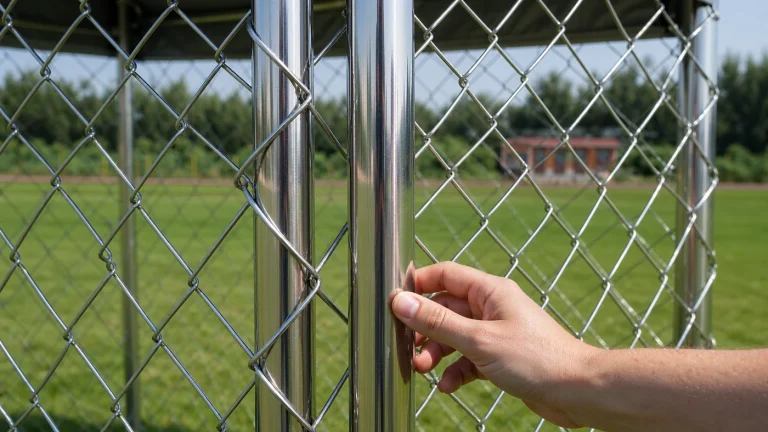
| Mesh and gaps | Look at panel joints, hinge gaps, feeding openings and the space under the gate. A jaw or paw can get stuck even if the puppy can’t escape. Never push its head through a gap to test the fit. |
| Hardware | Replace damaged panels or fittings and remove loose pieces before use. Keep the puppy out until sharp wire ends and broken welds have been corrected. Check the main gate lock and any feeding-door lock. |
| Floor and bedding | Look for rocking panels, lifted mat edges, puddles and slippery spots. Replace wet bedding with dry bedding. Remove torn fabric and anything the puppy chews loose. |
| Water and shade | Keep fresh water within reach and the bed dry and shaded. Make sure air can circulate. Check the shade again as the sun moves. |
These checks apply the safe-environment principles in Defra’s dog welfare code for England, including fresh drinking water and a dry, ventilated resting area. They are not a certification that a particular kennel is puppy-safe. [2]
A Specification Check: Size Does Not Establish Puppy Suitability
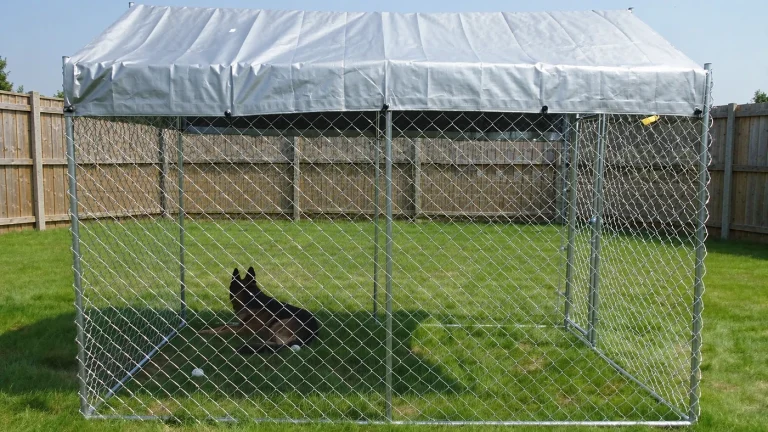
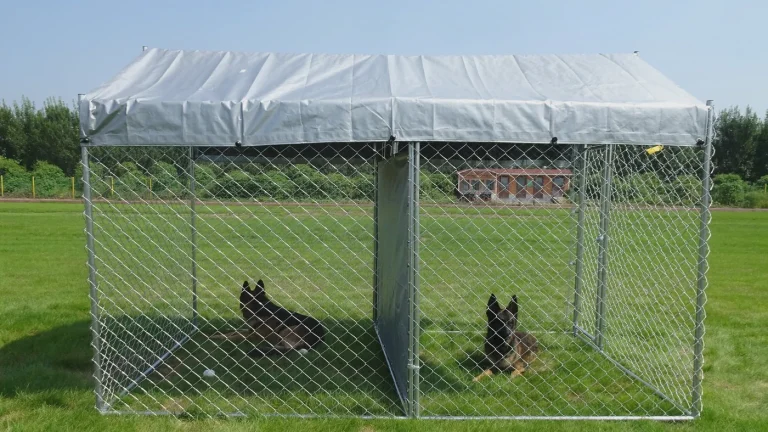
Haisen’s published welded-panel kennel specifications list overall dimensions of 8 ft long × 4 ft wide × 6 ft high and a rotating, lockable feeding door. Multiplying the stated length and width gives a nominal outside footprint of 32 sq ft, or about 2.97 m². The page reviewed did not give actual mesh openings or gate gaps, so those specifications alone cannot establish a small puppy’s fit. This is a published-specification check, not a puppy-use trial.
Ask for those measurements and the clear internal dimensions. With the bed and bowls in place, your puppy should have room to turn, stretch out and reach water. Keep climbable items away from the walls. If you need a custom kennel layout, put the required openings and gaps on the drawing for the supplier to confirm.
What Needs Cleaning Before the Puppy Returns?
Wash wet-food bowls after every use, and dry-food and water bowls daily, following the CDC’s example cleaning schedule. Clean more often when items are visibly dirty; young or sick pets may need more frequent cleaning and disinfection. [4]
Pick up feces promptly. For suspected parvovirus contamination, ask your vet which disinfectant and cleaning method suit the surface; many household cleaners won’t kill the virus. Follow the label for dilution, contact time, rinsing and pet re-entry. A surface being dry enough for chemical safety does not establish that contaminated ground is free of infection. [1] [4]
When Should You Keep the Puppy Indoors?
Keep your puppy indoors during severe weather. A canopy leaves it exposed to outdoor temperatures and wind-driven rain. Before using the run, confirm the manufacturer’s fixings for your installation surface and documented wind and snow limits for the frame and canopy together.
If your puppy shivers in cold or wet conditions, move it somewhere warm and dry. Contact your vet promptly if it seems unwell or keeps shivering. [2]
Heavy panting, drooling, weakness, vomiting, confusion or collapse after heat exposure can mean heatstroke. Get your puppy out of the heat, start cooling it with cool water and seek emergency veterinary care immediately. Keep cooling it safely on the way. Don’t wait for a thermometer reading. During extreme heat and humidity, keep your puppy indoors. [5]
Vomiting and diarrhea also need prompt veterinary advice, especially if your puppy is unusually tired or eating less. Cornell recommends parvovirus testing for puppies with these symptoms. Tell the clinic about any possible infectious exposure before you arrive. [1]
Check the kennel details before you order
Send Haisen your planned dimensions, installation surface and puppy’s size. Ask for mesh and gate-gap measurements, fixing requirements and any documented load limits.