Keep the feeder inside the coop if the run is open to rain or wild birds, or if chickens cannot reach it throughout their waking hours. A dry, sheltered run that excludes wild birds can be a practical feeding spot when indoor space is limited. Choose by feed protection and access, not floor space alone: Virginia Cooperative Extension specifically lists feeding poultry inside as a biosecurity measure [1].
Neither location works automatically. An indoor feeder needs a clean spot away from droppings and room for birds to eat; an outdoor feeder needs more than a lid over the hopper. In both places, birds need free access to fresh feed and water [2].
Coop or Run at a Glance
| Your setup | Where to put the feeder | What decides it |
|---|---|---|
| Open run with visiting wild birds | Inside the coop | Keep feed separated from wild birds |
| Run tray exposed to rain or roof runoff | Inside, unless a genuinely dry feeding area is available | Protect the feed birds actually eat, not just stored feed |
| Dry, sheltered run that excludes wild birds | The run can work | Birds must be able to reach it whenever they are awake |
| Pop door stays shut after birds become active | Provide feed inside | An outdoor feeder is useless while the door is closed |
| Storm confinement or a housing requirement | Inside the birds’ permitted housing | Maintain access and follow applicable animal-health instructions |
| Small coop with little spare floor space | A protected run may help | Extra space does not override weather protection or biosecurity |
When an Indoor Feeder Is the Better Choice
The Run Does Not Protect the Feed
If wild birds can reach the tray, feeding outside undermines the separation recommended by Virginia Cooperative Extension. Its indoor-feeding advice is a routine disease-prevention measure, not something to postpone until an outbreak warning appears [1].
Rain is a separate reason to choose the coop. A hopper lid may keep the reserve feed dry while the exposed tray gets wet. If the tray cannot stay sheltered, use a dry indoor position rather than assuming a covered hopper makes outdoor feeding suitable.
Birds Are Awake Before the Door Opens
Late let-out, bad weather, or confinement can leave an outdoor feeder out of reach. Put enough feeding capacity inside for the birds using it, rather than treating an undersized backup as sufficient for the whole flock. UConn Extension calls for free access to fresh feed; the relevant question is whether birds can eat, not whether a feeder has been filled somewhere else [2].
For chicks in a brooder, place feed and water within the brooder they occupy. Their feeding arrangement should follow their current housing, not the adult flock’s outdoor routine.
The Coop Is Large Enough for Feeding
A coop is not only a sleeping space. Feeding inside can be workable when the tray is accessible, kept clear of droppings, and does not obstruct movement or cleaning. Moving feed outdoors is an option for a suitable run, not a rule that indoor feeding is always wrong.
When a Run Feeder Can Work
A run feeder is worth considering when the feeding area stays dry, wild birds cannot access it, and the flock has reliable access. It can leave more room inside a small coop and make filling and cleanup easier to reach.
Virginia Cooperative Extension gives laying-hen space guidelines of 3 to 4 square feet indoors and 10 square feet in the outdoor run per bird [1]. These are housing guidelines, not evidence that all feeders belong outside. Poultry Extension also explains that indoor space requirements increase when birds lack outdoor access [3].
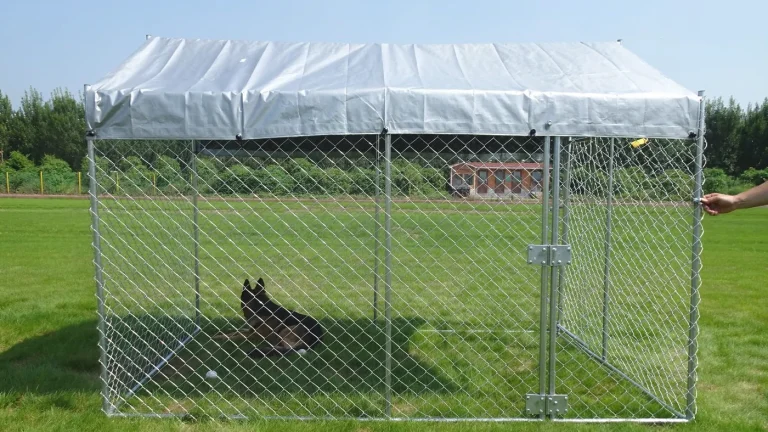
When planning a walk-in chicken run, mark the sheltered feeding area separately from the total footprint. For example, the 6.4 ft sharp-roof model has a listed 6.4 by 9.8 ft footprint, or about 62.7 square feet before allowing for equipment. That calculation does not establish how much tray space stays dry or how many birds the completed setup can house.
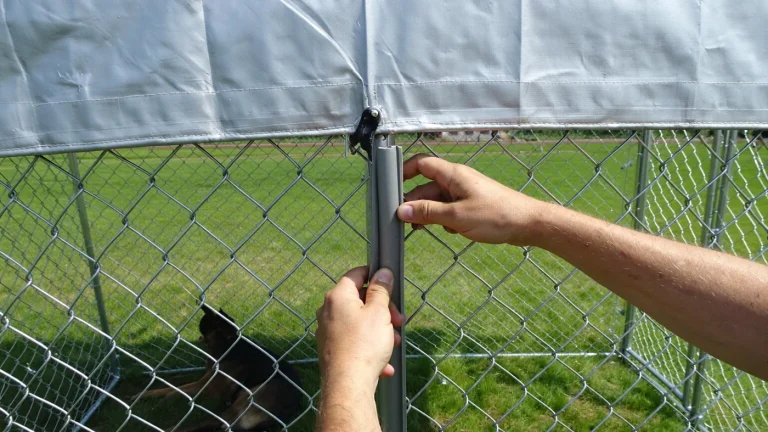
Mesh and roofing serve different purposes. A mesh top alone is not rain protection, and a canopy alone does not establish that wild birds are excluded. USDA APHIS notes that wild birds can introduce disease and that contaminated feed or water can spread avian diseases [4]. Check the enclosure and feeding point rather than relying on the word “covered.”
Set Up the Feeder Correctly in Either Location
Allow Enough Eating Space
UConn Extension recommends about 2 to 3 linear inches of feeder space per bird, with up to 6 inches for meat-type birds and turkeys [2]. For six adult laying hens, the 2-to-3-inch allowance gives 12 to 18 inches of accessible feeding edge. Count only the edge birds can actually use; a side pressed against a wall does not provide access.
This is a linear-space calculation, not a universal capacity rating for every feeder design. Check the feeder’s instructions and watch whether all birds can get to feed. If one bird guards the tray, a second feeding position may be more useful than adding length at the same crowded spot.
Adjust Height and Control Spills
Set the top lip of the feeder at the birds’ back height, following Virginia Cooperative Extension’s guidance. UConn also recommends adjustable feeders and keeping troughs only half full to reduce waste [1] [2].
Keep the tray clear of drinker splashes and make spilled feed easy to collect. Do not confuse feed dust with a moisture source: Virginia’s advice about placing waterers outside to reduce coop humidity concerns waterers, not proof that dry feed itself raises humidity [1].
Make Night Storage a Separate Decision
Moving an open feeder from the run into the coop is not the same as sealing it against pests. Once birds have settled for the night, collect spills and secure feed in a closed, pest-resistant container. Restore access before birds become active again. If the flock wakes before let-out, plan indoor feeding rather than leaving breakfast behind a shut door.
A Practical Check Before Keeping the Feeder There
Use these observations to assess your own setup before settling on a permanent feeding spot.
- At first light: Check the feeder from the birds’ side of the pop door. Can they reach feed before you open it?
- During feeding: Watch the smallest bird and a lower-ranking bird. Check comfortable reach and whether either is repeatedly pushed away.
- After rain: Inspect the tray and feed itself, not just the ground. Look for damp feed, splashes, and roof-edge drips. Move the feeding point if shelter fails.
- During cleanup: Check whether spilled feed can be collected without moving heavy equipment. For an awkward layout, a custom-size run can be planned around a feeding and cleaning area, but the final shelter still needs checking.
- Before a routine change: Recheck access when the flock is confined, the door schedule changes, or new birds alter competition at the tray.
What Changes During an Avian Influenza Alert?
Follow current instructions from your local animal-health authority, including any housing requirements. Do not assume a mesh-topped run is equivalent to indoor housing or resume outdoor feeding solely because a warning disappears. Virginia’s recommendation to feed poultry inside and APHIS’s biosecurity guidance remain relevant outside declared outbreaks as well [1] [4].
The best feeder location is the one that keeps feed protected and reachable. Choose the coop when the run cannot do that; use the run only when its shelter, exclusion, and access arrangements make it suitable.
Planning a walk-in run around the feeder?
Send your target length, width, mesh and canopy needs for a model-specific quotation.